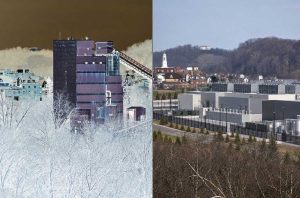
Pennsylvania is running out of good places to put data centers, and it is running out of money to clean up its abandoned coal mines. A growing group of researchers and developers thinks one problem might help solve the other. The idea is to build the server farms on the ruined mine lands, and to cool them with the cold water sitting in the flooded mines below. For a region that lives with orange streams and empty cleanup budgets, it is an idea worth watching closely, and warily.
Pennsylvania has 5,586 abandoned mine sites and no realistic way to pay the roughly 5 billion dollars it would take to fix them all. At the same time, at least 100 data centers are being proposed across the state, and communities keep fighting them over noise, land, and water. Some researchers see abandoned mines as a fit for both: the land is already disturbed, the flooded mine pools stay naturally cold, and a developer might help pay for cleanup. The catch is that heating and moving that mine water could make the pollution worse, and nobody has proven it will not.
The pitch: cold water and cheap land
Data centers run hot, and cooling can eat up around 40 percent of the electricity a typical one uses. Water is the usual answer, which is why a medium-sized facility can go through something like 100 million gallons a year, and why proposed centers keep colliding with the communities that share their water. One project near Archbald, Wildcat Ridge, is estimated to need up to 3.3 million gallons a day in summer.
Now look at an abandoned mine. The flooded workings underground hold enormous volumes of water that sits at a steady 40 to low 50 degrees Fahrenheit year round. That is close to free cooling. The land above is already cleared and disturbed, often with power lines and roads still in place from the coal days. Researchers at Penn State and groups like the Eastern Pennsylvania Coalition for Abandoned Mine Reclamation have been mapping which sites could work. Of the thousands of abandoned mines in the state, they estimate about 160 have mine pools big enough to matter.
The estimated cost to reclaim all 5,586 of Pennsylvania’s abandoned mine sites, a bill the state has never come close to covering. The hope is that a paying tenant could help shoulder some of it.
The catch under the surface
Here is where a watershed group leans forward. Most of these mine pools have never been mapped accurately, so no one knows exactly how they connect or where the water goes. Acid mine drainage is a chemistry problem, and chemistry reacts to heat and movement. Warming the water in a mine pool, or pumping it through a cooling system and back, could stir up reactions that pull more iron, aluminum, and acid into the water than a stream has ever had to handle. The worst case is a heavier metal load surfacing downstream, and fish kills in creeks that were finally starting to recover.
There is also a plainer problem: the mine solves land and sometimes cooling, but it does not solve the power grid. Every one of these projects still needs an enormous electricity supply, and that, not acreage, is usually what stops a data center cold.
“The mine can solve land and sometimes cooling. However, it does not solve the grid. The bottleneck is typically in megawatts, not acreage.”
Matt Prusak, chief business officer, Giga Energy
Where this is happening in our basin
This is not a far-off thought experiment. In Greene County, a planning commission voted favorably in late 2025 on a data center at the former Robena Mine. In Washington County, CNX Resources has floated a data center at the Consol mine site. West of us in Boyers, Iron Mountain has run a data center 220 feet underground in a former limestone mine since 2013, proof that the basic idea works even if the coal-mine version is unproven. Farther northeast, the fight over Wildcat Ridge in Archbald shows how hard the public pushback can get. These are our counties, our watersheds, and our legacy pollution on the table.
The justice angle is hard to ignore too. The communities sitting on this mine damage are often the poorest in the state, and studies have found that areas living with mine drainage earn substantially less than areas that do not. Whatever gets built on these lands, the people nearby have already paid for the coal era once.
Why it matters for the rest of us
The H2O network exists because legacy pollution and clean water are the defining fights of this basin, and this proposal sits right on top of both. Done with honest water monitoring, enforceable cleanup commitments, and closed systems that are proven not to make the drainage worse, data centers on mine lands could turn a liability into a source of cleanup money. Done in a rush, chasing the artificial intelligence boom without the science, they could reheat a problem the basin has spent decades cooling down. The difference is in the details, and the details are exactly what watershed groups are built to watch. Cold mine water is a tempting thing to sell. It is worth making sure we know what it costs first.
Reporting drawn from Inside Climate News, “Building Data Centers on Pennsylvania’s Abandoned Mines” (September 22, 2026). Figures, sites, and quotations are as reported there, including work by Penn State researchers and the Eastern Pennsylvania Coalition for Abandoned Mine Reclamation. Current as of September 28, 2026.