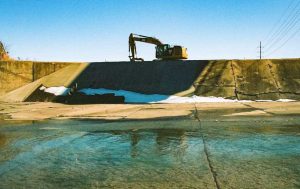
Across Ohio, cities are looking at the low head dams in their rivers and deciding they are more liability than legacy. Washington Court House is removing its Paint Creek dam with H2Ohio money, southwest Ohio has already taken one out, and the Youngstown area has nine removals planned on the Mahoning River, squarely in the Upper Ohio basin.
Washington Court House received nearly $1 million from Ohio’s H2Ohio Rivers Program to remove the Paint Creek dam in Eyman Park, a roughly one year project. The Tait Station Low Dam near Dayton is already out, at a cost of about $1.7 million, roughly a third of what repairing it would have cost. Nine dam removals are planned on the Mahoning River near Youngstown.
Why the dams are coming out
Most of these structures are low head dams, modest walls of concrete less than 15 feet tall that once served mills, factories, or water intakes and now serve nothing. Washington Court House’s city manager, Joe Denen, put it bluntly: the dam has no functional purpose on the creek. What low head dams do still produce is danger. Water pouring over the crest creates a recirculating current at the base that traps swimmers and paddlers, and hundreds of people have died at these structures nationwide.
“If you got trapped in it, you would not be able to get out.”
Sarah Hippensteel Hall, Miami Conservancy District, on the recirculating current below a low head dam
What rivers get back
Removal is not only a safety project. Free flowing reaches let fish migrate again, flush out the sediment that piles up behind dams, and eliminate the warm, stagnant pools where algae thrives. In Washington Court House, the plan replaces the dam pool with gradual banks planted in native vegetation where families can actually reach the water. The economics increasingly point the same direction: when removal costs a third of repair, as it did at Tait Station, the old default of patching the concrete one more time stops making sense.
Why it matters for the rest of us
The Mahoning work means this trend is arriving in our own basin, and every community in the network with an obsolete low head dam should be paying attention. These structures are drowning hazards, water quality problems, and barriers to the fish recovery many of our groups are working toward. Ohio’s H2Ohio Rivers Program is showing that state money can carry a removal from study to demolition, and a completed project one county over is the most persuasive exhibit a group can bring to a skeptical borough council.
Source: The Ohio Newsroom, Statehouse News Bureau, September 16, 2026.