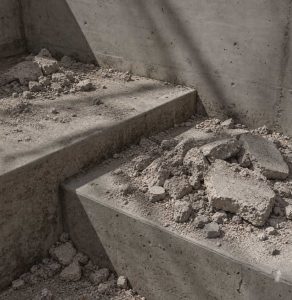
The mountains of crushed concrete left over when buildings and roads come down might have a second life in mine drainage treatment. New research published September 16 finds that recycled concrete aggregate can neutralize acid mine drainage much like the limestone most passive systems rely on, at a lower cost, with one important catch.
A study published September 16, 2026 in the journal Mine Water and the Environment found that recycled concrete aggregate can raise the pH of acid mine drainage the way limestone does, making it a potential lower cost treatment material for some abandoned mine sites, though it gradually loses effectiveness as mineral coatings build up on its surface.
What the researchers tested
The study was led by Allison Fenske, an assistant professor of environmental engineering at Juniata College and a Penn State alumna, working with Nathaniel Warner, associate professor of civil and environmental engineering at Penn State. The team evaluated recycled concrete aggregate and iron rich materials as treatment media because, as Fenske explained, both are readily available, inexpensive, and known to raise the pH of water. Raising pH is the heart of passive treatment: as acidic water is neutralized, dissolved metals like iron and aluminum drop out of solution instead of coating streambeds downstream.
“Ideally, this could enable more acid mine drainage to be treated and help restore miles of Pennsylvania streams.”
Nathaniel Warner, Associate Professor of Civil and Environmental Engineering, Penn State
The catch, and why it still matters
The material is not a forever fix. As the concrete works, mineral coatings accumulate on its surface and gradually armor it, the same fouling problem that plagues limestone beds, and the researchers documented that its effectiveness declines over time. But cost is the binding constraint for most passive treatment projects, and demolition concrete is cheap and available nearly everywhere, including in the post industrial towns where mine drainage is worst. A material that trades some longevity for a much lower price could pencil out at sites that no group could afford to treat with conventional media. The work was funded by the National Science Foundation and Befesa Inc.
Why it matters for the rest of us
Mine drainage is the signature wound of our basin, and the math of treating it has always been brutal: too many discharges, too few dollars. Research that lowers the cost per treated gallon expands the list of discharges worth attempting. Groups designing passive systems should watch for follow up work on how the material performs at field scale, and it is a fair question to raise with DEP or your engineering partners the next time a treatment system design is on the table.
Source: Penn State News, September 16, 2026, on research published in Mine Water and the Environment.