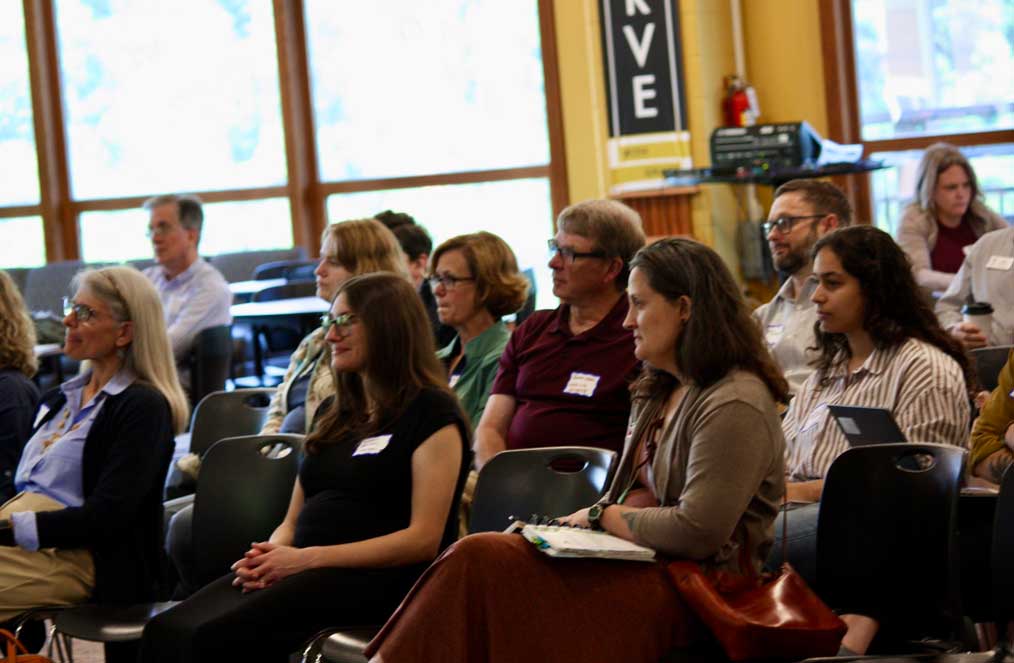
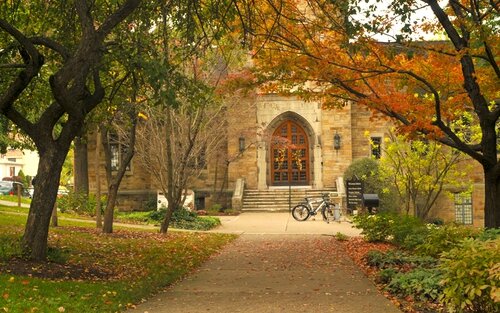
The Spring 2026 Confluence brought the H2O Water Network together at Geneva College in Beaver Falls for a day built around three simple things: connecting, sharing, and learning. Folks came from across the Upper Ohio River Basin, and the program covered a lot of ground, from the nuts and bolts of delivering clean water to the long shadow of microplastics. Here is some of what stuck with us.
The people keeping the taps running
A panel discussion put the spotlight on the side of the water story that does not get told often enough: the utilities. Tracy Price from the Beaver Falls Municipal Authority and Duane Goodsell from the Municipal Authority of Westmoreland County (MAWC) walked through what it actually takes to keep clean water flowing to communities, day in and day out. It is easy to forget there are people and systems behind every glass of tap water until someone lays out the work involved.
Running the future on En-ROADS
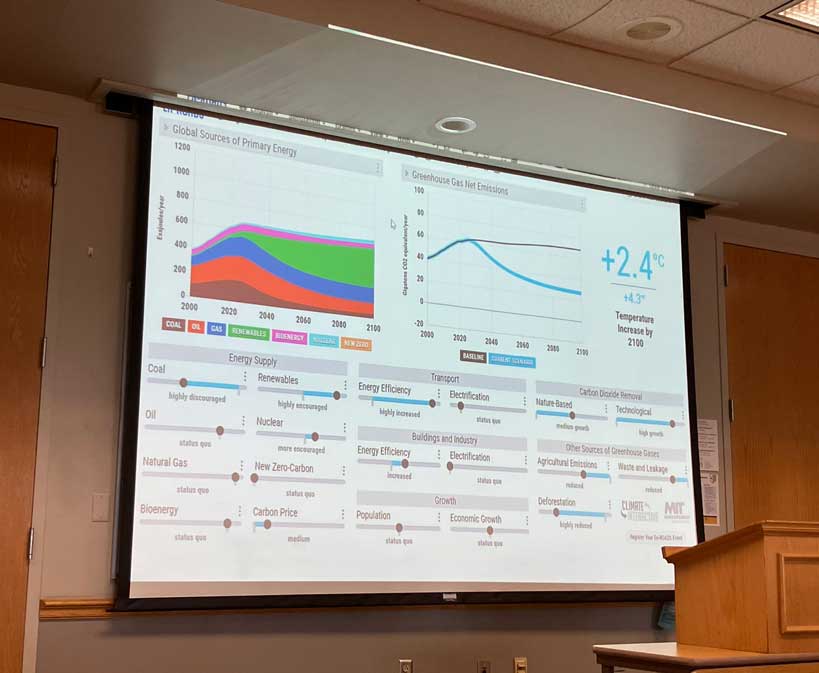
Esmee De Corti and Mary Schrag, Climate Ambassadors from Pitt’s Mascaro Center for Sustainable Innovation, walked the room through En-ROADS, a climate simulator that lets you see how today’s policy and technology choices play out over decades. Pull a few levers and watch what happens to global temperature, extreme weather, energy use, public health, and GDP. It is one thing to talk about trade-offs in the abstract and another to watch them move on a screen in real time.
Rethinking stream restoration
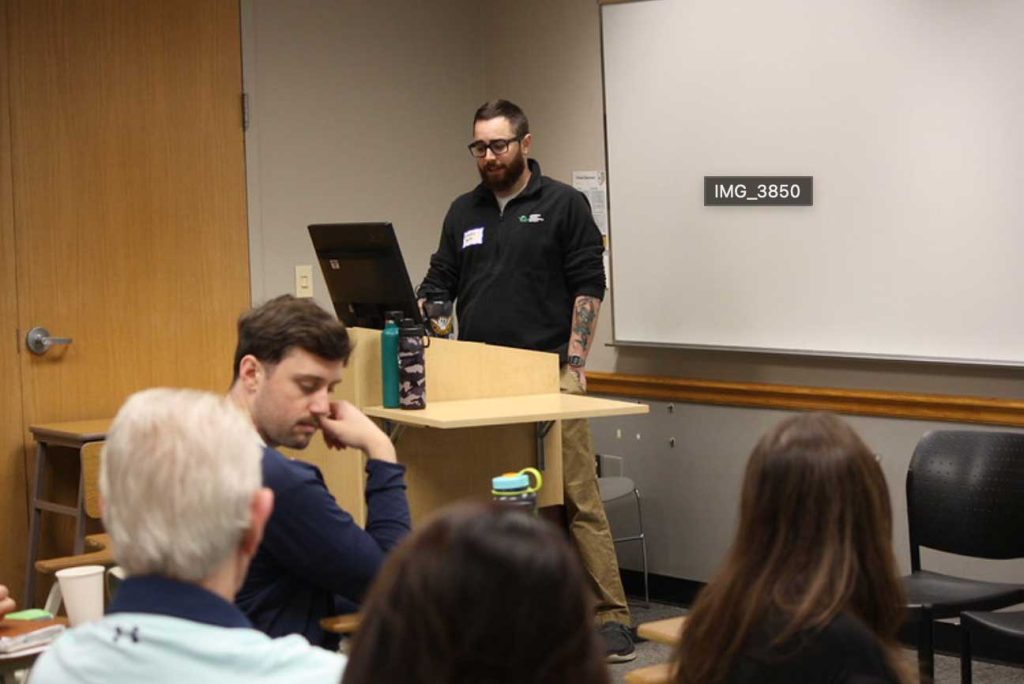
Dr. John Jackson of the Stroud Water Research Center offered a reality check that landed hard. Over the past 25 years, only a handful of streams impaired by nonpoint source pollution have been taken off the impaired list. His takeaway: if the work has not moved the needle, it may be worth rethinking the approach, whether that is how we define impairment in the first place, the scale we are working at, or how long we realistically expect recovery to take.
The deeper point was about scale. You cannot fix a watershed-sized problem by working inside the channel or along the banks alone. It takes a whole-watershed approach, with communities and landowners working together, especially along the small headwater streams, and stacking up as many effective practices as possible: gray infrastructure, healthier soil, streamside forests, the works. And with storms getting harder to predict, whatever we build has to be resilient enough to roll with a changing climate.
Living with floodplains
Matt Genchur from the PA Association of Floodplain Managers made the case that floodplain management is everybody’s business, not just a job for the folks with the maps. The number that stuck: according to FEMA, 99% of U.S. counties have experienced a flood event in the last 20 years. Managing the floodplains we share takes everyone at the table.
Keynote: the microplastics problem
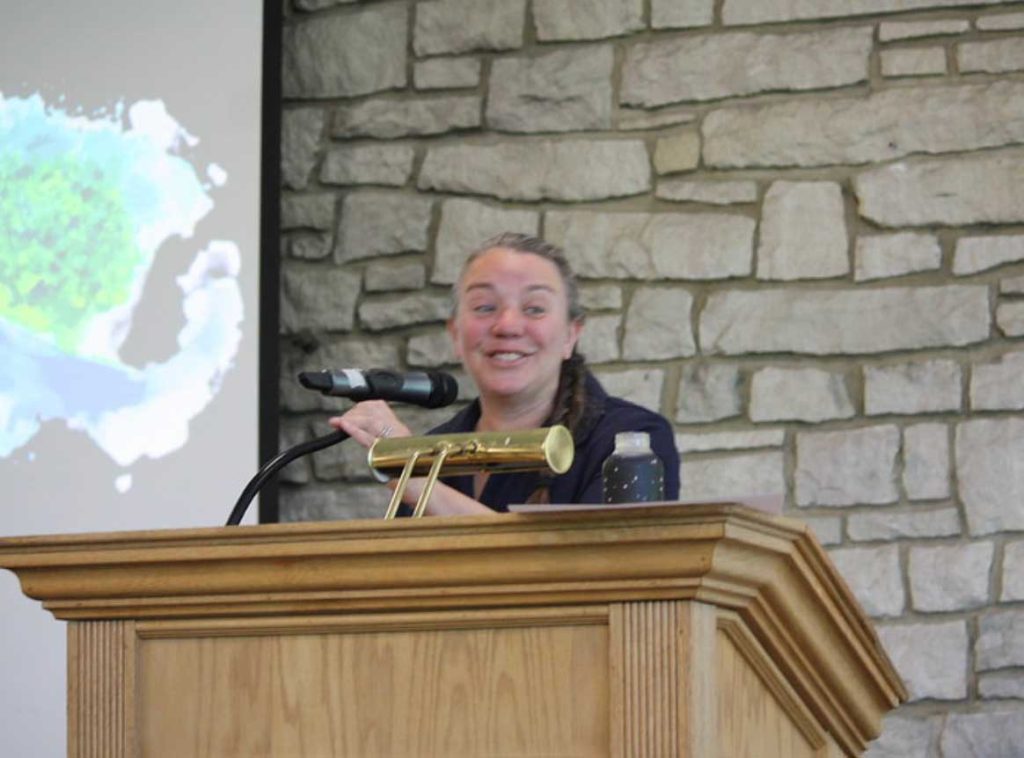
Dr. Sherri Mason closed the day with a keynote on microplastics, and the findings were tough to shake off. They are nearly everywhere. Their concentration in sediment has been doubling roughly every 20 years. And some of the most common types are also among the most toxic. If you want to go deeper, Mason’s reporting on the subject is worth your time: Microplastics are everywhere in Pennsylvania’s water, but the tide may be turning.
Closing
A confluence is the place where waters meet, and that is about what the day felt like: a lot of different currents pulling in the same direction. Thanks to everyone who showed up to share what they know, and to Geneva College for hosting. The basin is in better shape when we learn out loud like this.
More Photos Here