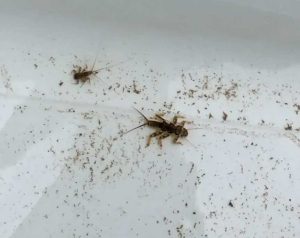
File this one under things that surprised us. If you want to scoop a net through a Pennsylvania stream and count the mayfly larvae to check on the health of the water, the Commonwealth says you first need a fishing license and a scientific collector’s permit. Yes, really.
Macroinvertebrates, the stream bugs, the caddisflies, stoneflies, mayflies, and their neighbors living under the rocks, are one of the best free indicators of water quality we have. Their presence or absence tells you whether a creek is healthy long before a lab test does. So it came as a genuine surprise to many of us that collecting them is not a free-for-all. In Pennsylvania, it is regulated the same way fishing is.
Why a fishing license, of all things?
Here is the part that trips everyone up. Under Pennsylvania law, “fishing” is defined broadly enough to include taking any aquatic organism by any means or method. Dipping a net for stream bugs counts. That means anyone 16 or older who collects macroinvertebrates needs a valid Pennsylvania fishing license, full stop, even if they never touch a fish.
On top of that, structured monitoring and research, the kind of repeated, methodical sampling watershed groups do, generally requires a Scientific Collector’s Permit from the Pennsylvania Fish and Boat Commission. The permit is what lets you collect and possess aquatic organisms for educational and scientific purposes, use specialized nets and gear, and sample outside the usual seasons and limits.
We asked an expert. He was not surprised at all.
We ran the question past a regional entomologist, who confirmed it plainly:
“Yes, you need a fishing license and a scientific collector’s permit, and any assistants you have in the field have to be listed on the permit. There are exemptions for students collecting with a teacher who has all the permits.”
A regional entomologist familiar with Pennsylvania collecting rulesWhat you actually need before you get in the water
- A current Pennsylvania fishing license for everyone 16 and older who will be collecting.
- A Scientific Collector’s Permit from the PA Fish and Boat Commission for monitoring or research work.
- Every assistant listed on the permit, and each of them holding their own fishing license too.
- Advance notice to the regional law enforcement office (24 hours) before you head out to collect.
The permit comes in three flavors
| Permit type | Who it is for | Fee |
|---|---|---|
| Type I | Nonprofits and educational groups | $10, covers the holder plus up to five licensed assistants |
| Type II | State and federal government staff | No charge, assistants still need fishing licenses |
| Type III | Private and commercial consultants | $50, covers the holder plus up to five licensed assistants |
The one break: students with a teacher
There is an exemption worth knowing about, and it is exactly the one the entomologist pointed to. High school and undergraduate students can collect without their own licenses if their teacher holds an Educational Aquatic Field Study Permit, which the Fish and Boat Commission issues at no charge. The teacher leading the group still needs a valid fishing license and has to carry the permit in the field, and the activity has to stay within the educational limits (smaller nets, open seasons, modest numbers of specimens). For classrooms and youth watershed programs, that is the path that keeps things simple.
Apply for a Scientific Collector’s Permit
Aquatic Field Study and the educational exemption
None of this is a reason to stop monitoring our streams. If anything, it is a reminder that the bugs under those rocks are taken seriously as a public resource, and that a little paperwork up front keeps our volunteers and our data on the right side of the law. If your group is planning to sample this season, budget the time to get licensed and permitted before you wade in.
Requirements summarized from the Pennsylvania Fish and Boat Commission and the Coldwater Heritage Partnership guide to collecting aquatic organisms. Expert confirmation provided by a regional entomologist.