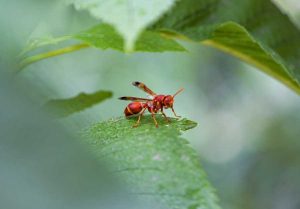
Mayflies, stoneflies and caddisflies are the bugs fly anglers try to imitate and the bugs stream monitors count to decide whether a creek is healthy. A new study from eastern Pennsylvania found microplastics in roughly one out of every three of them.
Researchers from California State University, Millersville University and the Stroud Water Research Center examined aquatic insects collected from six streams in the Schuylkill River watershed between 1998 and 2019 and found microplastics in about a third of them. The plastic turned up in forested headwaters as well as in streams running through towns, and the highest levels came from Manatawny Creek, a mostly wooded stream in Berks and Montgomery counties. The Schuylkill is on the other side of the state from us, but the same insects anchor the food web in the Youghiogheny, the Casselman, the Mon and the Allegheny, and the routes plastic took to reach them run through every watershed in our basin.
What the researchers found
The study, published this year in the journal Insects and reported by The Allegheny Front, relied on something stream scientists rarely get: a long shelf of preserved samples. Stroud Water Research Center, based in Chester County, has been collecting and archiving stream insects for decades. That archive let the team go back in time and look for plastic in mayflies, stoneflies and caddisflies gathered over more than two decades.
About one in three of the insects they examined carried microplastics. Contamination was not confined to developed areas. It showed up across urban and forested sites alike, throughout a watershed that supplies drinking water to roughly 2 million people in southeastern Pennsylvania.
The surprise was where the levels ran highest. Manatawny Creek, which drains forested headwaters, produced the most contaminated insects in the study. Clay Arango of Central Washington University, who studies microplastics in Washington’s Yakima River and was not part of the Pennsylvania team, told The Allegheny Front that plastic is now turning up in sparsely populated places too, possibly shed from hikers’ synthetic clothing or carried in on the wind. His summary was blunt: anywhere researchers look, they are likely to find plastic.
Share of the mayflies, stoneflies and caddisflies sampled from six Schuylkill watershed streams that contained microplastics.
How plastic ends up inside a mayfly
Microplastics are the small fragments left behind as larger plastic breaks down, plus fibers and particles that start out small. The world produces more than 400 million metric tons of plastic a year, and a share of it eventually crumbles into pieces small enough to move through air, soil and water. Those particles have since been found in human blood, brain tissue and organs, and some researchers have linked exposure to a higher risk of heart attack and stroke.
In a stream, the main routes in are familiar to anyone who works on water quality: treated wastewater discharges, biosolids spread on farm fields, stormwater runoff and plain old litter. The researchers think the insects most likely swallowed the particles while grazing on algae that had collected plastic, or while feeding on the fine organic silt that settles in pools and along stream edges.
“It’s a really good illustration, or a reminder, that everything we do in a watershed, whether it’s on the land or in our wastewater, whatever we’re releasing into the environment, it often just ends up in our water.”
John Jackson, senior research scientist, Stroud Water Research Center
A rise, then a dip that may not mean much
The archive also allowed the team to track change over time. Microplastic levels in the insects climbed among samples collected between 1998 and 2010, then declined through 2019. Jackson cautioned against reading that drop as good news. Higher stream flows may simply have flushed plastic downstream faster than new pollution settled in, which would lower what the insects picked up without lowering what entered the watershed.
Samantha McBride, an assistant professor at the University of Pennsylvania who studies microplastics, noted that archived specimens let scientists ask a question that one-time sampling cannot: whether the plastic in a stream today comes from recent sources or from older debris that is still breaking apart. That distinction matters for anyone trying to decide where cleanup and prevention dollars will do the most good.
Why it matters for the rest of us
Aquatic insects are the workhorses of volunteer stream monitoring across the Upper Ohio Basin. Watershed groups in our network kick-net riffles and count mayflies and stoneflies because those insects tell us, cheaply and reliably, whether a stream is recovering from mine drainage, sewage or sediment. This study is a reminder that a stream can pass that test and still carry a load we are not counting. If plastic reached the insects in a wooded Berks County creek, there is little reason to assume the Laurel Highlands headwaters feeding the Yough or the Casselman are exempt.
It also strengthens the case H2O has been making on the drinking water side. In August we invited partner organizations to sign on in support of federal monitoring for microplastics in drinking water, because you cannot manage what nobody measures. A watershed that serves 2 million people just showed plastic working its way into the bottom of the food chain. The basin that serves our communities deserves the same look, and the bugs, as usual, are willing to go first.
This article draws on reporting by Zoë Read for The Allegheny Front, published October 1, 2026, and on the study by researchers from California State University, Millersville University and the Stroud Water Research Center published in the journal Insects. Current as of October 2, 2026.