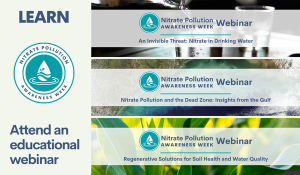
Nitrate is one of the most widespread yet invisible threats to drinking water and healthy ecosystems. During Nitrate Pollution Awareness Week, July 26 through August 1, 2026, the Izaak Walton League of America is bringing together community scientists, health experts, and conservationists to shine a light on the issue and take action. Here’s how you can attend the free educational webinars and get involved.
Free live webinars
Three free webinars run midweek, each at noon Central / 1:00 p.m. Eastern. Registration is required, and each links to its own Zoom sign-up.
An Invisible Threat: Nitrate in Drinking Water
Wednesday, July 29 · 1:00 p.m. ET (noon CT). Dr. David Cwiertny, Director of the University of Iowa’s Center for Health Effects of Environmental Contamination, explores the scientific links between nitrate exposure and health outcomes including cancers, thyroid disease, and birth defects. Register here.
Regenerative Solutions for Soil Health and Water Quality
Thursday, July 30 · 1:00 p.m. ET (noon CT). Dr. Matt Liebman, Iowa State University Professor Emeritus, shares actionable strategies to build resilience on agricultural landscapes and reduce nitrate pollution through regenerative practices. Register here.
Nitrate Pollution and the Dead Zone: Insights from the Gulf
Friday, July 31 · 1:00 p.m. ET (noon CT). Dr. Cassandra Glaspie, Louisiana State University, examines how nitrate pollution in the Mississippi River Basin fuels the Gulf’s dead zone, drawing on hypoxia research. Register here.
Get involved
You don’t have to be a scientist to help. Test your local waters with a free Nitrate Watch kit and submit your results to the Clean Water Hub, adding to a growing national picture of nitrate pollution. Request a free Nitrate Watch kit.
You can also learn more about Nitrate Pollution Awareness Week and the full lineup of activities.
Shared by the H2O Water Network to help member communities protect drinking water and watershed health across the region.