With the purchase of a conservation easement on 4,540 acres of forest in McKean County, the Western Pennsylvania Conservancy has now permanently protected more than 300,000 acres across western Pennsylvania. The milestone took 94 years to reach, one farm, forest, and floodplain at a time.
The Western Pennsylvania Conservancy announced this week that a 4,540-acre easement in Sergeant Township, McKean County, along the New York border, pushes its all-time total past 300,000 acres permanently protected. The newly eased land stays forested and remains open to the public for non-motorized recreation.
4,540 acres in Sergeant Township
The new easement covers working forest in Sergeant Township, up where Pennsylvania meets New York. Under its terms the land cannot be developed, stays in forest, and remains open for non-motorized recreation, so hikers, hunters, and anglers keep their access while the trees keep doing their quiet work. A conservation easement does not transfer ownership; it permanently retires the right to develop the ground, which is often the most cost-effective way to protect a large tract.
Acres permanently protected by the Western Pennsylvania Conservancy since its founding 94 years ago.
Where land protection becomes water protection
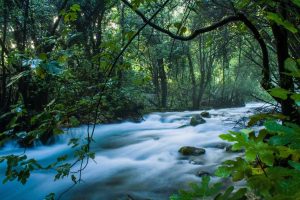
McKean County sits at the top of the Allegheny system, in the high forest country that feeds the river our basin ultimately drinks from. Intact forest is the cheapest water infrastructure there is. The canopy breaks the force of a hard rain, the root zone and leaf litter soak it up and release it slowly, and the streams that leave a big unbroken woods run cooler, clearer, and steadier than anything draining a parking lot. Every acre of headwaters forest that stays forest is flood storage and filtration that nobody downstream has to build or maintain.
Ninety-four years of patient arithmetic
The Conservancy is one of the oldest and largest land trusts in the region and a longtime partner in the basin’s water work, from its land holdings to its watershed science and mussel surveys. A total like 300,000 acres is not the product of one grand gesture. It is nearly a century of individual closings, each one a landowner deciding the land mattered more as forest than as lots, and an organization with the patience to keep showing up. For the watershed groups downstream, each of those closings is one less future problem arriving in the water.
There is also a practical lesson here for smaller groups. Easements are how a modest organization protects land it could never afford to buy outright, and landowners in every county of this basin hold forest that matters to somebody’s drinking water. If your group knows such a landowner, a conversation about easements with a land trust is one of the most durable things you can set in motion. The Conservancy just showed what 94 years of those conversations add up to.
Reported by Tim Schooley for the Pittsburgh Business Times and WPXI, published November 16, 2026, via Yahoo News, drawing on the Western Pennsylvania Conservancy’s announcement. Current as of November 20, 2026.