West Virginia completed funding packages for more than $58 million in water and wastewater projects on October 22, and the biggest of them, a new $47.3 million water treatment plant for Buckhannon, is being built partly with abandoned mine land money.
Governor Patrick Morrisey announced completed funding for projects in Upshur, Mingo, Wyoming, Cabell, and Wayne counties, led by a new water treatment plant and raw water intake for Buckhannon that includes $4 million in Abandoned Mine Land Economic Revitalization funding. The state Infrastructure and Jobs Development Council takes up the grant recommendations on November 4.
A mine lands fund helps build a water plant
The Buckhannon project is the one watershed groups should study. The $47.31 million package for a new treatment plant and raw water intake in Upshur County stacks $4 million in Abandoned Mine Land Economic Revitalization (AMLER) funding on top of $3 million in recommended state loans and principal forgiveness and $40.31 million in federal loans and grants. AMLER money exists to turn mine scarred land and communities toward economic recovery, and here it is anchoring basic drinking water infrastructure in the Buckhannon River valley, which drains to the Tygart Valley River and on to the Monongahela.
For groups working in mine affected watersheds, that is a funding precedent worth filing away. Abandoned mine dollars are usually discussed in terms of reclamation and treatment systems, but AMLER shows they can also underwrite the water plant downstream of the problem.
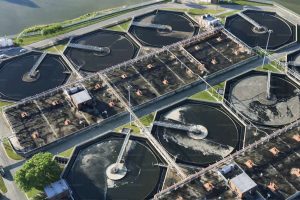
Abandoned Mine Land Economic Revitalization funding folded into Buckhannon’s new water treatment plant, in the headwaters of the Monongahela.
The rest of the package
An $8.74 million public water extension in Mingo and Wyoming counties will serve 236 customers in Justice and about 215 potential customers in Hanover, and will let Huff Consolidated School and the R.D. Bailey Lake facility connect to public water. In Cabell County, a $2.5 million upgrade to the Salt Rock wastewater treatment plant will serve 4,855 customers in Ona, Milton, and Culloden, financed through the Clean Water State Revolving Fund and the West Virginia Water Development Authority. Fort Gay in Wayne County receives $185,000 for a water main extension.
The funding mix across the package tells its own story: Infrastructure and Jobs Development Council grants, federal loans and grants, state revolving funds, and principal forgiveness, braided together project by project. The council is scheduled to consider the grant recommendations and proposed financing on November 4.
Why it matters for the rest of us
Most of these projects sit south of our basin, but Buckhannon is squarely in Monongahela headwaters country, and the AMLER angle travels well. Northern West Virginia and southwestern Pennsylvania have no shortage of communities where mine legacy and water system needs overlap, and this package shows a state treating those as one problem with one funding answer. If your group works with a town whose water system limps along next to abandoned mine lands, Buckhannon just handed you a model to point to. Somebody had to go first, and it turns out it was Upshur County.
Based on reporting by WSAZ NewsChannel 3 on Governor Morrisey’s October 22, 2026 funding announcement. Current as of October 23, 2026.