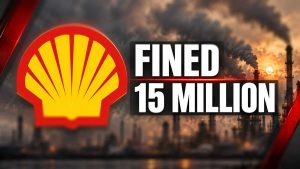
Pennsylvania has hit Shell with a $15 million penalty for air pollution violations at its Monaca ethane cracker on the Ohio River, one of the largest environmental fines in recent state history. Half of the money is earmarked for the surrounding Beaver County communities.
DEP announced the $15 million settlement on September 4, 2026, covering violations from 2023 through August 2026, including more than two dozen exceedances of visible emission limits plus excess benzene and nitrogen oxides. It follows a $10 million penalty in 2023 tied to the plant’s startup.
What Shell did wrong
Between 2023 and this August, the plastics plant exceeded its permit limits on visible emissions more than 24 times, released benzene, a known carcinogen, and nitrogen oxides, a smog precursor, above allowable levels, and failed to perform testing the state requires. This is the second major enforcement action against the facility, which received the largest tax credit package in Pennsylvania history, valued at $1.65 billion, to locate on the river in Beaver County.
What the state and neighbors are saying
“DEP is continuing to hold Shell accountable for air quality violations and continuing to secure resources”
Jessica Shirley, Secretary, PA Department of Environmental Protection
Community advocates were less satisfied. Hilary Flint of the Beaver County Marcellus Awareness Community said no amount of money can undo harm to someone’s health, and that for a company of Shell’s size, accountability has to mean more than writing a check. Shell said the agreement addresses environmental compliance matters and reaffirmed its commitment to operating responsibly.
Why it matters for the rest of us
These are air violations, but the plant sits directly on the Ohio River, and the fine signals that DEP is willing to keep pressing a chronic violator on the river corridor rather than treating the first penalty as the end of the story. For watershed groups that monitor industrial neighbors, the Beaver County fund is also worth watching: it is exactly the kind of pot that local environmental projects can eventually tap, and groups in the area should track how it gets set up and who decides where the money goes.
Source: The Allegheny Front, September 4, 2026. Current as of September 11, 2026.