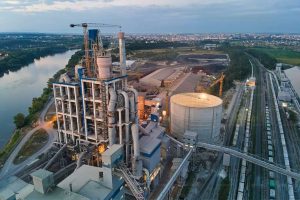
NextEra Energy Resources wants to build a $13 billion, 3.75 gigawatt gas plant on the Monongahela in rural Fayette County, and by early reporting it would draw roughly 30 million gallons of river water a day. Whether that number is alarming or unremarkable depends almost entirely on when you ask, and that is the part worth understanding before the county’s two public meetings this month.
NextEra has picked a 700 acre former coal site near Isabella, in Luzerne Township, for the East Riverside Energy Center, a 3.75 GW gas plant built in three phases through 2032. It is part of a $17 billion U.S. Japan investment package, brings an estimated 2,000 construction jobs and about 100 permanent ones, and draws roughly 30 million gallons a day from the Monongahela River. Two public meetings are set this month: Mountain Watershed Association’s town hall on data centers, September 10 at the Connellsville Community Center, and NextEra’s own public meeting September 15.
What’s actually being proposed
The plant would sit on reclaimed coal mining property near East Riverside Road and Palmer Adah Road, ground NextEra has already partly acquired, with agreements in place for the rest. Plans call for six 150 foot smokestacks and multiple gas turbine structures, built in three phases of roughly 1,250 megawatts each, reaching full 3.75 GW capacity by 2032.
The project traces back to a U.S. Japan trade arrangement announced in March 2026. County officials spent six months courting it against competition from Greene and Washington counties before the site became public on September 1. Fayette County Commissioner Scott Dunn has called it the largest investment in county history, in a region where the poverty rate sits near 16.8 percent.
It’s worth separating two different numbers that tend to get blurred together: $13 billion is capital investment, not local income, and the lasting local payroll, about 100 permanent jobs, is a small fraction of the 2,000 construction jobs. Construction work is real and valuable, but it doesn’t last. The number that sticks around is closer to 100.
The water question, in context
This is the part H2O readers will care about most, so here is the honest range rather than a single scary or reassuring number.
Early reporting on the project puts the water draw at roughly 30 million gallons a day from the Monongahela, for cooling and generation. NextEra and Commissioner Dunn have said some of that water will be treated and returned to the river, standard practice for gas plant cooling systems, but no public figure yet exists for how much is actually consumed versus returned. That distinction, consumptive use against gross withdrawal, is the number that will matter most once a formal DEP water withdrawal permit is filed, and it is worth watching for specifically rather than assuming from the 30 million gallon figure alone.
We checked that figure against the river itself. The USGS gauge at Masontown recorded the Monongahela’s flow on September 3, 2026 at about 2,200 cubic feet per second, close to the long term median for that date, which works out to roughly 1.4 billion gallons a day moving past that point. A 30 million gallon draw against that is a little over 2 percent, a modest share of a large river.
The river doesn’t run at average every day, and that’s the real story here. A withdrawal that is a rounding error most of the year can become a meaningful share of the river during the low water stretches that show up most summers and falls, the same conditions when fish, mussels, and other water users are already under the most stress. Supporters point to a real precedent: Duke Energy’s 620 megawatt Fayette Energy Facility has run nearby since 2003 without, in Commissioner Dunn’s words, a noise complaint or air quality issue. That’s a fair data point, though it speaks to air and noise, not to what a 30 million gallon draw does to the river during a dry September.
NextEra’s other project in the same two counties
The gas plant is not the only NextEra proposal moving through Fayette and Greene counties right now. A separate NextEra subsidiary is seeking state approval, including eminent domain authority, for a 107 mile transmission line carrying power out of the region to data centers in Northern Virginia. It’s a different project with a different structure, but it’s a useful reminder to read big investment numbers carefully: NextEra’s own economic filing for that transmission line claims $33 million in construction impact and 150 jobs, while the company’s own analysis shows it would create no full time jobs in Pennsylvania once built. Christina Blasinsky of the Center for Coalfield Justice, who has worked with landowners along that route, described the concern this way:
“That impending threat of potentially losing their homes is genuinely the biggest issue, that is the biggest concern that we hear from every resident that we speak to.”
Christina Blasinsky, Center for Coalfield Justice“The Mon Valley region built the steel that built America. Now it’s going to build the power that fuels America’s future.”
Sen. Dave McCormick, on the East Riverside Energy CenterWhy it matters for the rest of us
Whatever a person’s view on gas plants or data center growth, the water math is the part that holds up regardless of politics. A 30 million gallon daily draw is small against the Monongahela on a normal day and significant against it on a dry one, and the actual, permitted consumptive use figure has not been published yet. That is the number to watch for, not the 30 million gallon headline by itself. We will be following the DEP permitting process as it opens, and we would encourage anyone in the Mon Valley, whether this plant reads to you as opportunity or risk, to show up to one of the two public meetings this month and ask the water question directly.
Reporting and figures checked against Mountain Watershed Association’s original coverage, Marcellus Drilling News, the Washington Examiner, Construction Review Online, and WESA, along with current and historical discharge data from USGS gauge 03072655 on the Monongahela River at Masontown. River flow percentages are our own calculation from that USGS data. The 30 million gallon daily water figure reflects early reporting and has not yet been confirmed through a public DEP withdrawal permit. Current as of September 3, 2026.